- There are no more items in your cart
- Shipping
- Total £0.00

If you've ever watched a football match on Sky Sports, you've likely seen it happen. A player goes down, the physio rushes onto the pitch, and within seconds, they are speaking into an earpiece, relaying crucial information back to the coaching staff on the bench. This seamless communication is essential for making quick, tactical decisions that can change the course of a game.
For football coaches across the UK, these earpieces are not just accessories; they are a vital part of their toolkit. This guide will explore the types of earpieces used in professional football, their key features, and why they are indispensable for any coaching team serious about performance.
Understanding the Universal Earpiece
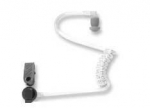
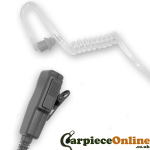
At the heart of on-pitch communication is the universal earpiece. This device allows coaches, physios, and other staff members to stay connected through a two-way radio system. The primary benefit is instant, clear, and private communication. In a loud stadium environment where shouting is ineffective, an earpiece ensures that every message—from tactical adjustments to injury updates—is heard loud and clear.
Most UK football coaches and their staff use a universal radio earpiece because it offers flexibility and reliability. The ability to coordinate actions without delay gives teams a significant competitive edge, allowing them to respond to changing game dynamics in real-time.
Key Features of Coaching Earpieces
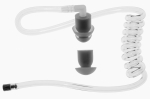
The standout feature of a universal earpiece is its adaptability, largely thanks to its detachable connector system.
Detachable Connectors
A universal earpiece typically uses a standard connection point, like a Hi-Rose connector, which allows different radio plugs to be attached. This means you can buy one high-quality earpiece and multiple, less expensive connectors for various radio models (e.g., Motorola, Kenwood, Icom).
This feature is incredibly useful in professional sports for several reasons:
- Flexibility: If a team's primary radio system fails or experiences frequency issues, they can quickly switch to a backup or borrowed set of radios by simply changing the connector on their earpiece.
- Cost-Effectiveness: It's more affordable to purchase multiple adapters than to buy a separate earpiece for every type of radio a team might use throughout a season.
- Durability: The main earpiece component is separate from the connector, which is often the part that sustains the most wear and tear. If a connector breaks, it can be replaced easily without needing to buy a whole new earpiece.
This modular design ensures that a coach's communication line remains open, no matter what technical difficulties arise.
Comfort and Design Options
When you're wearing an earpiece for the duration of a 90-minute match, plus pre-game and post-game analysis, comfort is non-negotiable. Ill-fitting earpieces can be distracting and uncomfortable. Fortunately, there are several styles to choose from.
D-Ring Earpieces
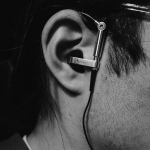
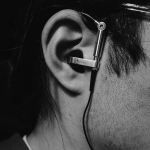
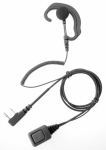
One of the most common styles seen on the touchline is the D-Ring earpiece. This design features a C-shaped soft rubber loop that rests on the outside of the ear. It is secure, comfortable for long periods, and hygienic, as it doesn't enter the ear canal. This makes it a great option for multi-user environments where different staff members might share equipment.
G-Shape Earpieces
Another popular and comfortable option is the G-Shape (or C-Shape) earpiece. Similar to the D-Ring, it hooks over the ear for a secure fit, ensuring it stays in place even during animated sideline moments. It is lightweight and designed for extended wear, making it a preferred choice for many coaches who need reliable comfort throughout a demanding match day.
Practical Applications on Match Day
The importance of radio earpieces becomes clear when you consider the high-stakes scenarios that unfold during a football match.
- Injury Assessment: When a physio attends to an injured player, they can provide immediate, confidential updates to the head coach. This allows the coach to decide whether to prepare a substitute, without alerting the opposition to the potential severity of the injury.
- Tactical Adjustments: An analyst watching from the stands can spot a tactical weakness in the opposition's formation and instantly relay that information to the bench. The coach can then give new instructions to the players without delay.
- Set-Piece Organisation: During a corner or free-kick, coaches can communicate specific instructions or last-minute changes to players near the touchline, ensuring everyone is aligned on the strategy.
In each of these situations, the speed and clarity offered by a reliable earpiece are paramount.
Elevate Your Team's Communication
In modern football, winning is a game of inches and seconds. The ability to communicate instantly and effectively across a coaching team is no longer a luxury—it is a fundamental requirement for success. Universal earpieces provide the reliability, flexibility, and comfort needed to keep the lines of communication open when it matters most.
By investing in the right equipment, you empower your staff to make faster, more informed decisions that can give your team the winning edge.
(180) (2)
 Whatsapp